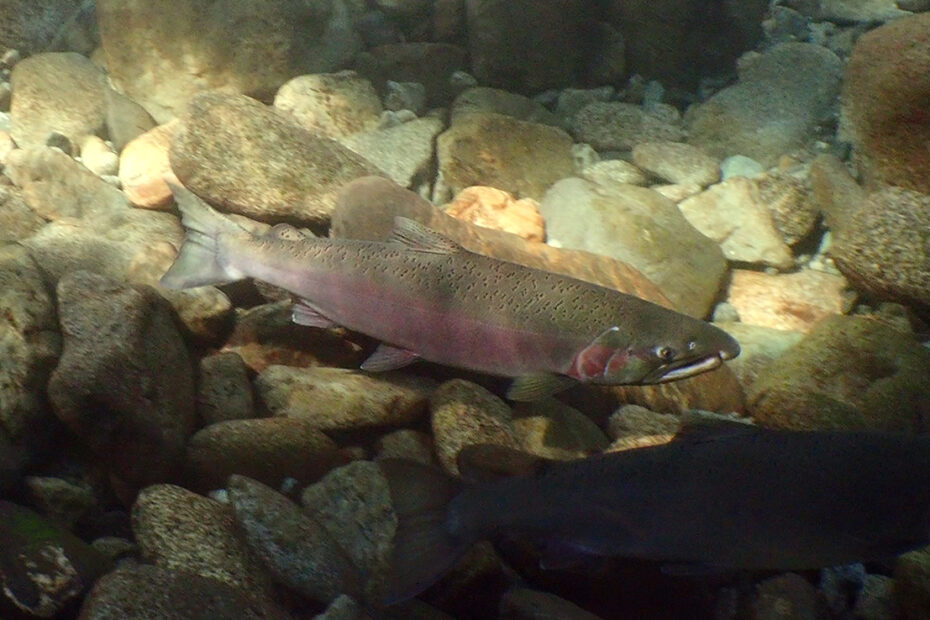
Dive into the remarkable world of coho salmon. This fish has nourished countless generations of people and plays a significant role in the diverse ecosystems it calls home.
Learn about the coho’s dynamic life cycle, range, size, and more.
Overview of Coho Salmon
The coho salmon is an anadromous fish originating from the North Pacific. It’s born in freshwater, eventually migrates to the ocean, then returns to its birth stream to reproduce. Like most Pacific salmon species, coho salmon are semelparous, which means they die after spawning.
Essentially all native coho populations are anadromous, but some associated with lakes don’t travel to sea.
Species and Name: Coho, Silver Salmon
Coho salmon, scientifically known as Oncorhynchus kisutch, owes its species name to the Russian common name kizhuch (кижуч). It’s one of the six distinguished species of Pacific salmon.
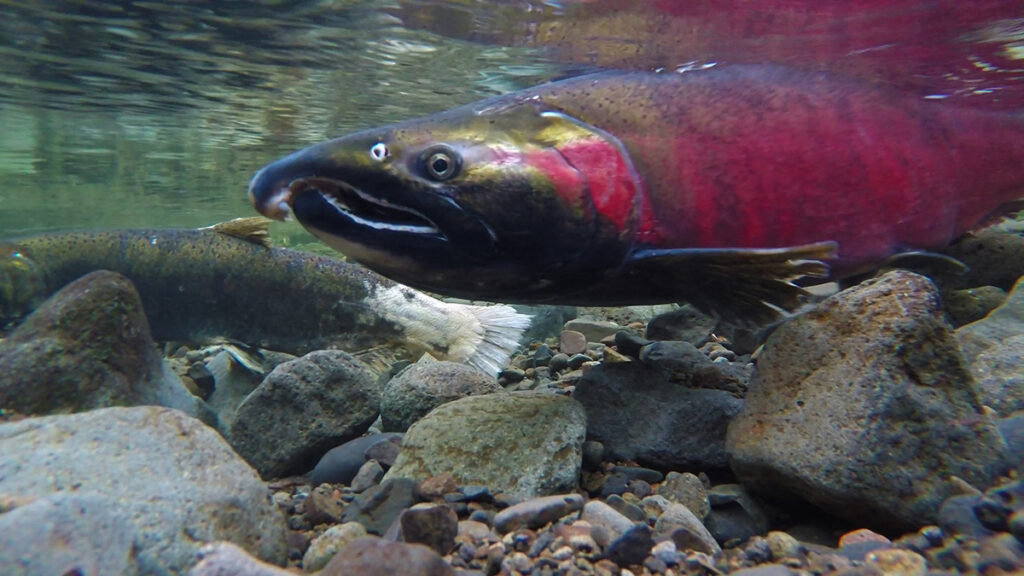
Silver salmon or “silvers,” is a common name for coho. And ocean-phase subadults are occasionally called “bluebacks” in BC. Mature males are also nicknamed “fire trucks” by fishermen when their appearance is bright red.
Range and Abundance of Coho
Coho salmon are more abundant than chinook and anadromous trout, but less than the other Pacific salmon.
This remarkable fish historically inhabited a wide range that spans both sides of the North Pacific Ocean, including tiny populations in the Arctic Ocean.
In North America, Coho salmon’s habitat extends from the northern range near Point Hope and Kotzebue Sound in Alaska (Arctic Ocean) but becomes scarce north of Norton Sound. Its southern distribution reaches as far as Scott Creek, just north of Santa Cruz in (Monterey) California.
In the Asian/Western Pacific region, the coho is primarily abundant around the Sea of Okhotsk and Kamchatka, with patchy occurrences along the Koryakia coastline, Anadyr River, and elsewhere. The southern limit of its range lies just north of Hokkaidō, Japan, and its northernmost boundary reaches Beringia in Russia of the Bering Sea region.
Coho Salmon Size
Coho salmon falls between the dimensions of pink and sockeye salmon but remains smaller than chum and chinook salmon.
On average, adult silver salmon measure around 28 inches (71 cm) and weigh between 7 to 11 pounds (3.2 to 5.0 kg). Coho salmon occasionally achieve larger sizes, reaching up to an impressive 36 pounds (16 kg).
Not Just Silver: Coho Salmon Appearance
The coho exhibits different shapes and colors during its complex life cycle.
Coho salmon fry are approximately 1.2 inches (30mm) long at emergence and are bigger-bodied than pink, chum, and sockeye fry. Their coloration is also more vibrant, with striking orange dorsal and anal fins complemented by distinctive black and white markings on the edges.
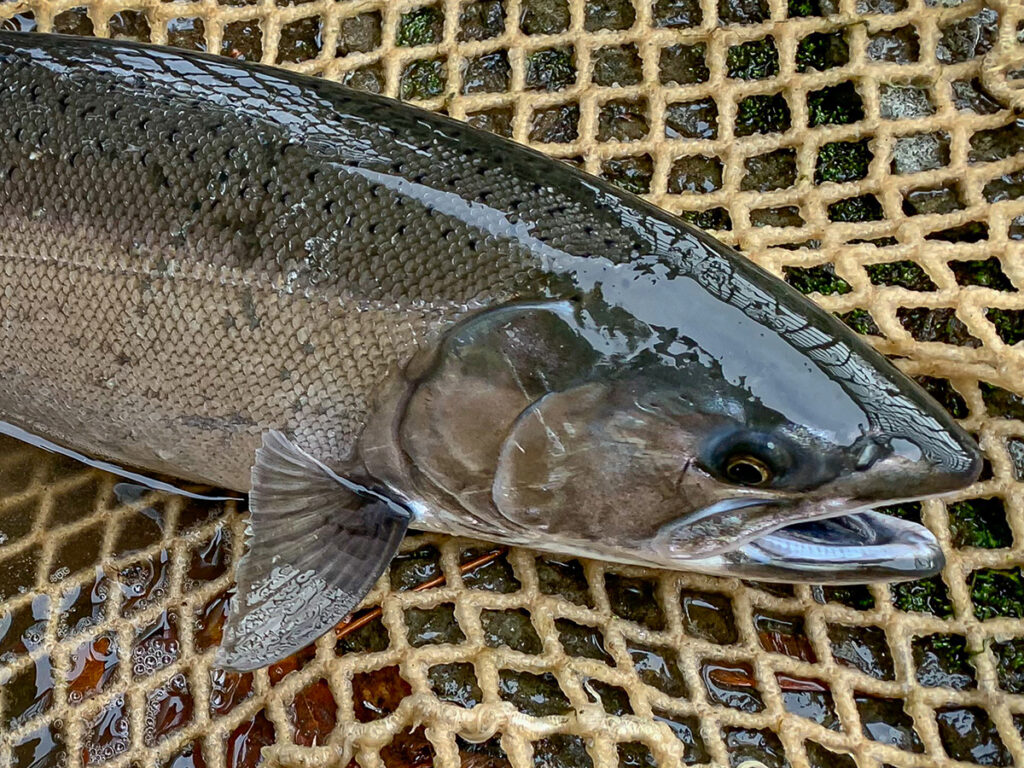
During their ocean phase, coho display bright silver sides and dark-blue backs. Spots are limited to the upper lobe of the tail and back.
Coho are identifiable by their dark mouth and tongue but white gum line. It distinguishes them from the black gums of chinook salmon.
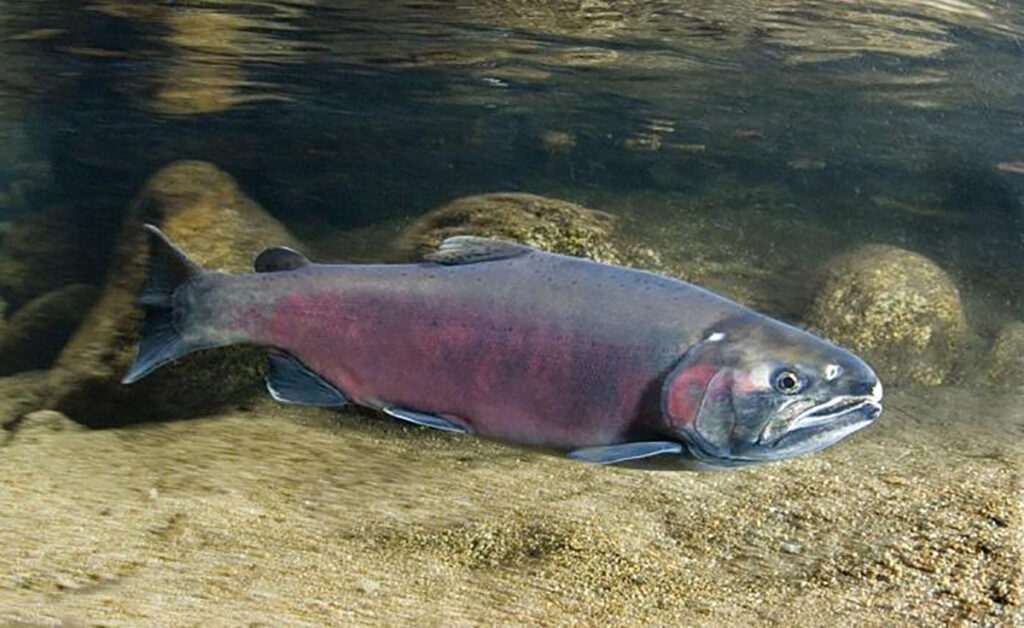
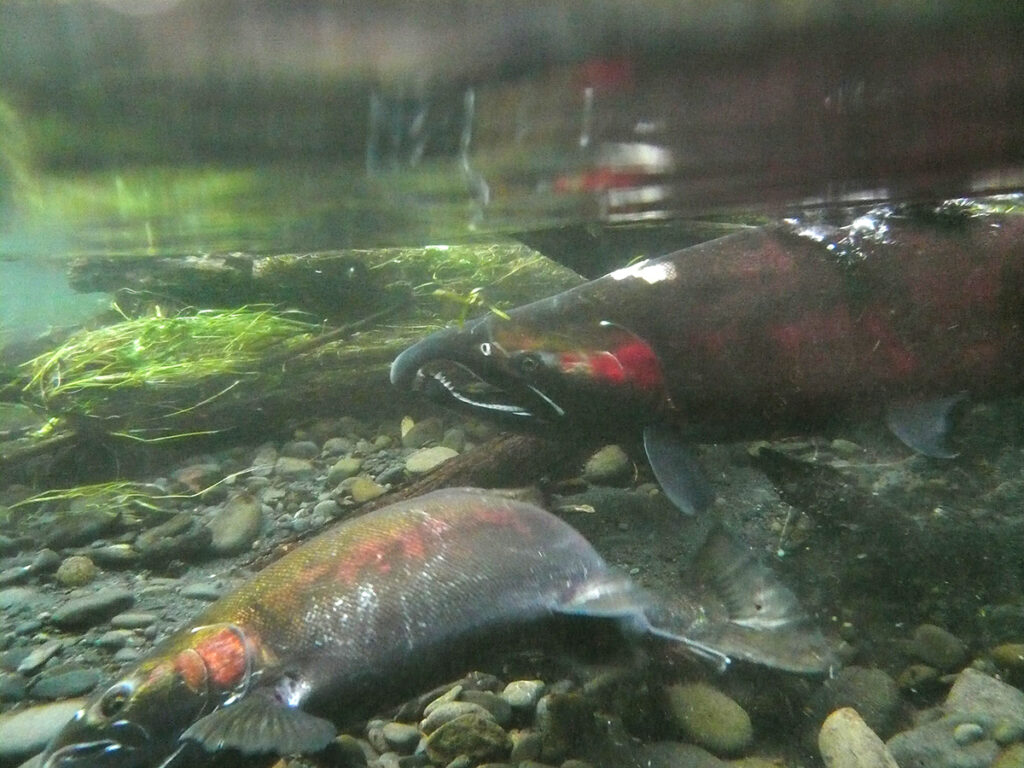
During their spawning phase, coho salmon dramatically change their appearance. Both sexes may develop a kype. Males also often have a hooked upper jaw and a slight arching of the back.
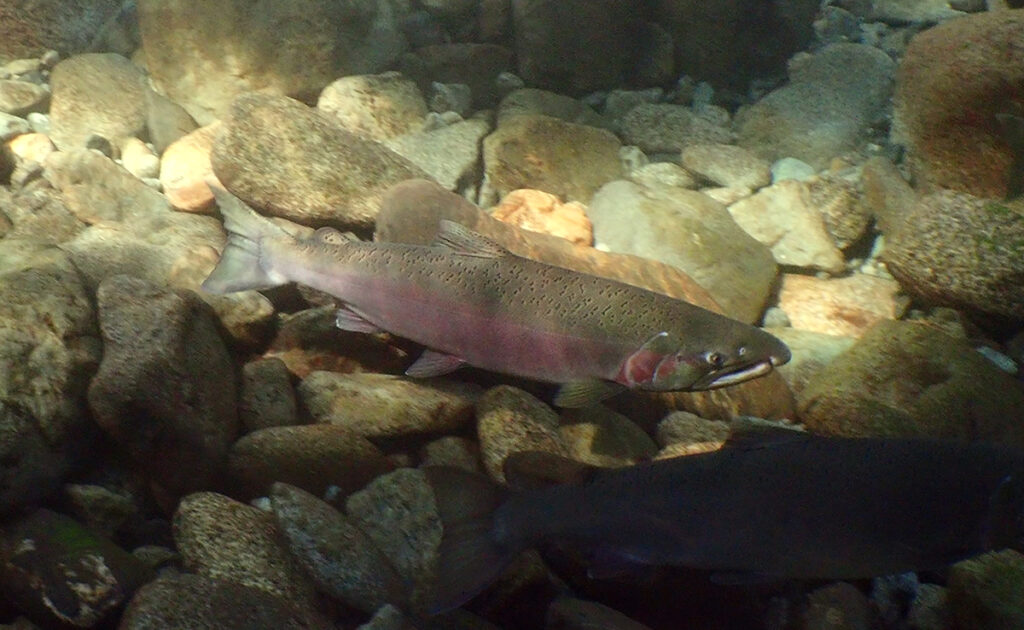
Sexually maturing coho exhibit a light-pink or rose shading along the belly while their head and back turn green. Their spots become more noticeable, as well.
As coho fish reach full maturity, their skin takes on a bright-red hue with darker backs, and they feature dark bellies and more noticeable spots on their backs. Additionally, mature females may appear darker in color compared to males.
Life Cycle of Coho Salmon
The coho has a remarkable life history, which is much more complex than most fish. However, its life cycle is a little less complex than chinook and sockeye salmon.
Most coho salmon live three years but range between two and four in age.
Early Life History – Freshwater Coho
Coho salmon begin their life cycle as eggs, which typically hatch in late winter or early spring. This incubation period in the redd (nest) is about 6-7 weeks and varies based on water temperature.
During the alevin life stage, also around 6-7 weeks, these young salmon rely on their yolk sacs for nourishment. Alevin are particularly sensitive to contaminants in their environment, making it crucial to ensure their habitat remains clean and free from pollutants.
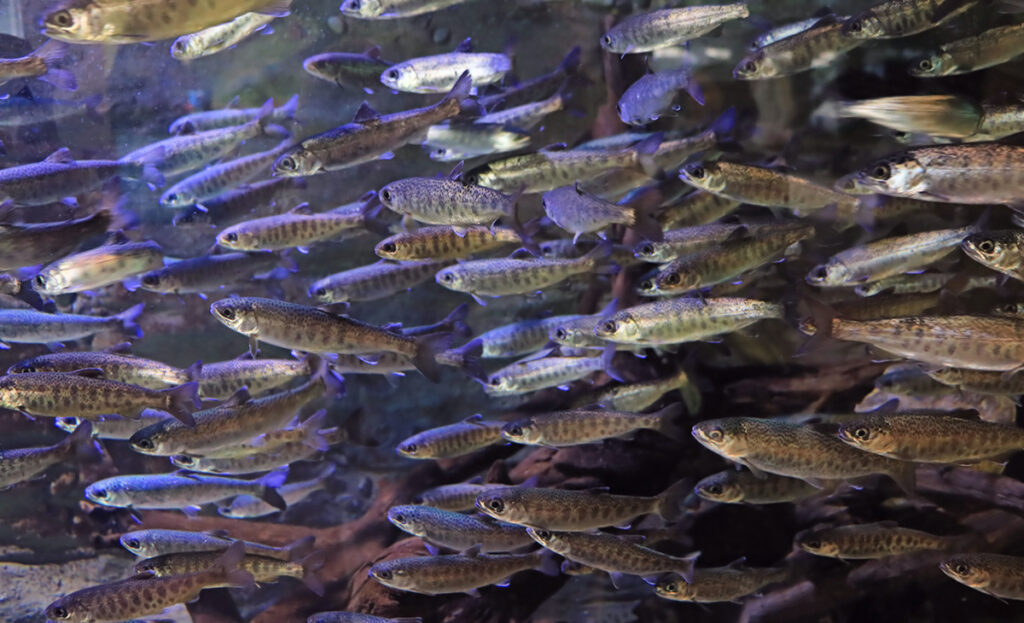
Coho salmon usually spend 1-2 years residing in their freshwater natal streams. They often spend the winter in off-channel habitats like sloughs. Beaver ponds are another preferred environment.
After one or two winters, coho transition into the smolt stage, ranging in length around 3.9-5.9 inches (100-150 mm). They trade their river-camouflage parr marks for silver scales that suit the marine environment.
Coho salmon smolts migrate to the sea during the elevated flows of spring. Depending upon the watershed, this can be anywhere from March to July.
Coho Salmon in the Ocean
Few coho smolts spend time in brackish estuaries, instead moving to feed in coastal waters. Ocean-phase coho tend to stay on the continental shelf and away from the open ocean.
Most coho salmon spend one or two years in saltwater before making their way back to their natal streams. But there are also males, known as “jacks,” that only spend the summer in the salt before returning to spawn.
Return to Freshwater and Spawning of Coho
Coho salmon migrate back to freshwater during the fall and early winter, typically being the last Oncorhynchus species to arrive. They have a preference for spawning in small coastal streams with moderate gradients and tend to select sites with groundwater seepage. It’s less common, but there are inland populations of coho salmon, as well.
Jack coho are much smaller than mature males and more common in hatchery populations.
When Do Coho Salmon Spawn?
Coho spawn later than most other salmon – ranging from the fall to the spring. Early-run coho typically spawn in November and December, while late-run coho spawn from January to April.
Coho Diet and Feeding Behavior
Coho salmon feed on a variety of organisms during each stage of their life cycle.
During their freshwater stages, coho salmon have feeding habits somewhat similar to their relatives, rainbow and cutthroat trout. They establish feeding territories that balance the availability of food with energy exertion and the risk of predation.
Coho consume plankton and aquatic invertebrates on the bottom and in the water column. Their diet includes chironomids, midge larvae, mayflies, caddis, stoneflies, and terrestrial insects that fall into the water.
After transitioning to the marine environment, coho salmon undergo a dietary shift, turning to a combination of plankton and fish for sustenance. As they grow, fish becomes the primary component of their diet. Herring, sand lance, anchovies, and sardines are common food sources for coho salmon. They also eat juvenile salmonids (especially chum and pink salmon fry) and juvenile sablefish.
The Silver Salmon
The coho salmon is a beloved sportfish and a sought-after delicacy. Its tasty, nutrient-rich meat has sustained many cultures for generations.
But the coho isn’t just valuable to people. It plays a crucial role in the freshwater and marine ecosystems it calls home. It’s both predator and prey. And after death, the decomposing coho nourishes its freshwater birthplace with its marine-derived nutrients.
By paying attention to and respecting the significance of silver salmon, we ensure it thrives and fulfills its vital ecological role.