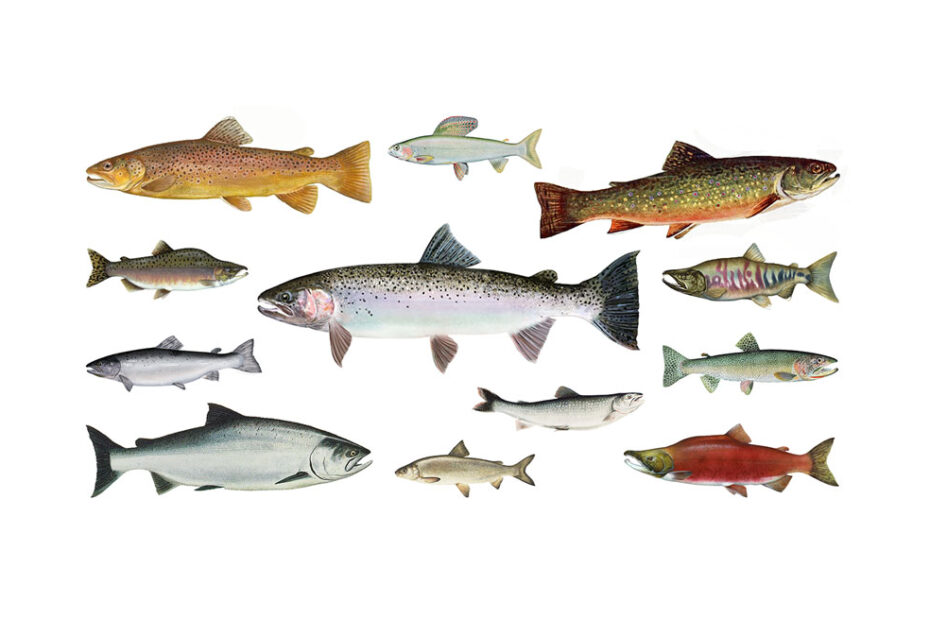
Numerous salmon, trout, and char species are among the world’s most beloved fish. They belong to the Salmonidae family, which also includes whitefish, grayling, lenok, and taimen. There are 11 extant genera within Salmonidae, encompassing approximately 200 species. Collectively, these species are known as salmonids.
Dive into the fascinating worlds of these charismatic and popular fish. This page is a starting point for a deeper exploration of some of the world’s most iconic species.
Pacific Salmon and Trout Species: Oncorhynchus
Pacific salmon and trout are among the world’s most popular fish. Species in their genus, Oncorhynchus, include rainbow trout and steelhead, chinook, coho, and sockeye salmon. They range from the mountains of Mexico to the Arctic Ocean and most habitats in between.
The genus name Oncorhynchus refers to the mature males’ hooked snout or kype.
Pacific Salmon Species
There are six species of Pacific Salmon, five of which are found in North America. Pacific salmon die after spawning (semelparous) with one exception.
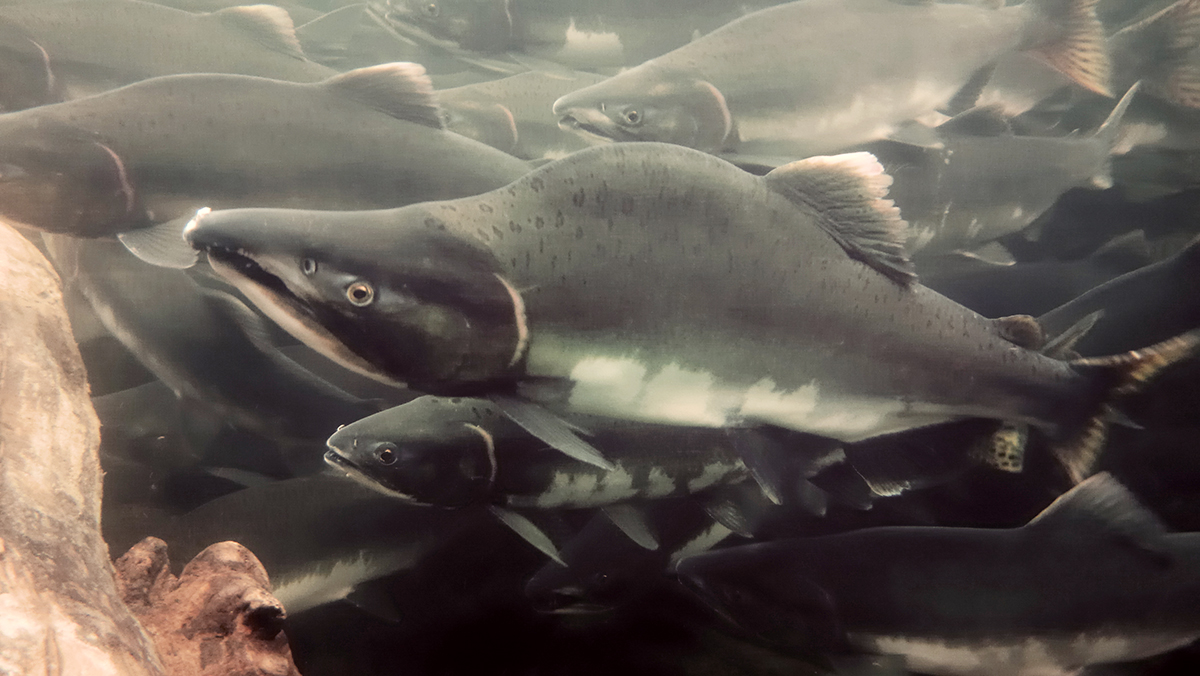
Pink Salmon
Also known as the humpy, the pink salmon is the most abundant Pacific salmonid. Its two-year life cycle is unique among salmon and trout.
Pink salmon take center stage in this in-depth guide.
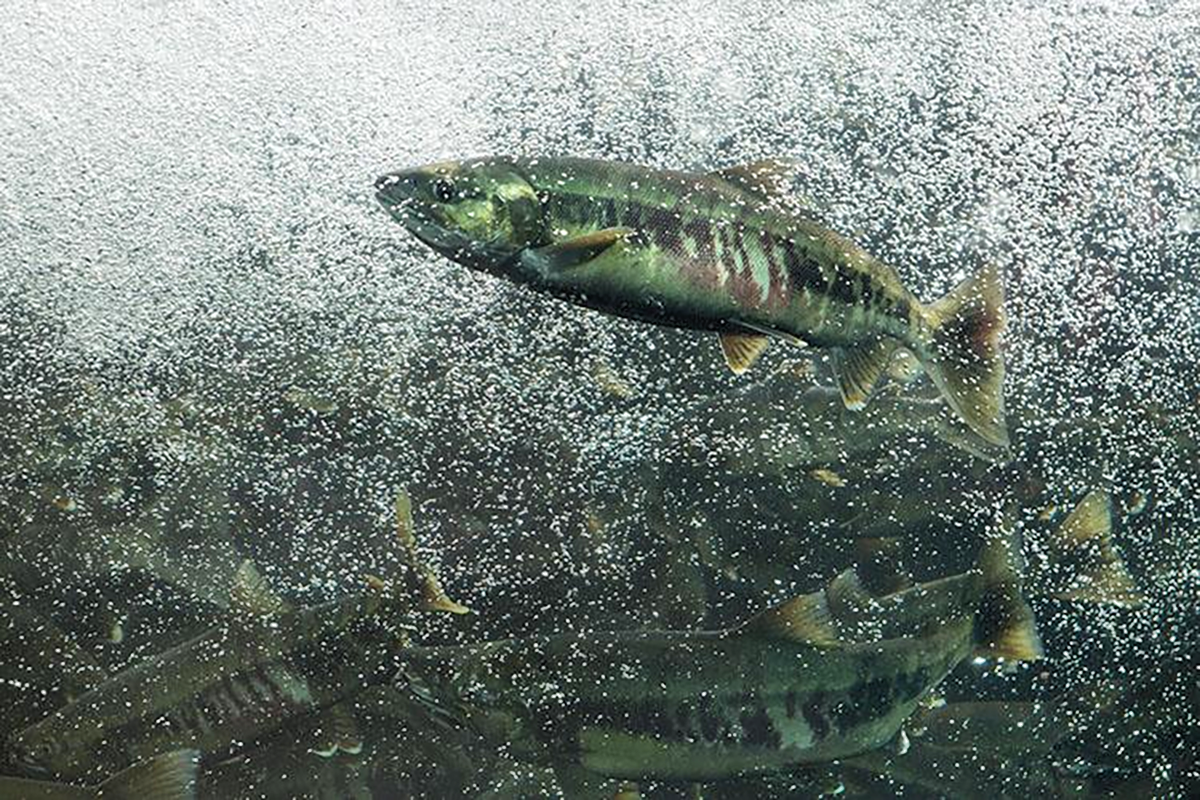
Chum Salmon
Known as the dog salmon, the chum is the third-most abundant salmon. This beefy fish lives between three and five years and dies after spawning.
Dive into the fascinating world of chum salmon.
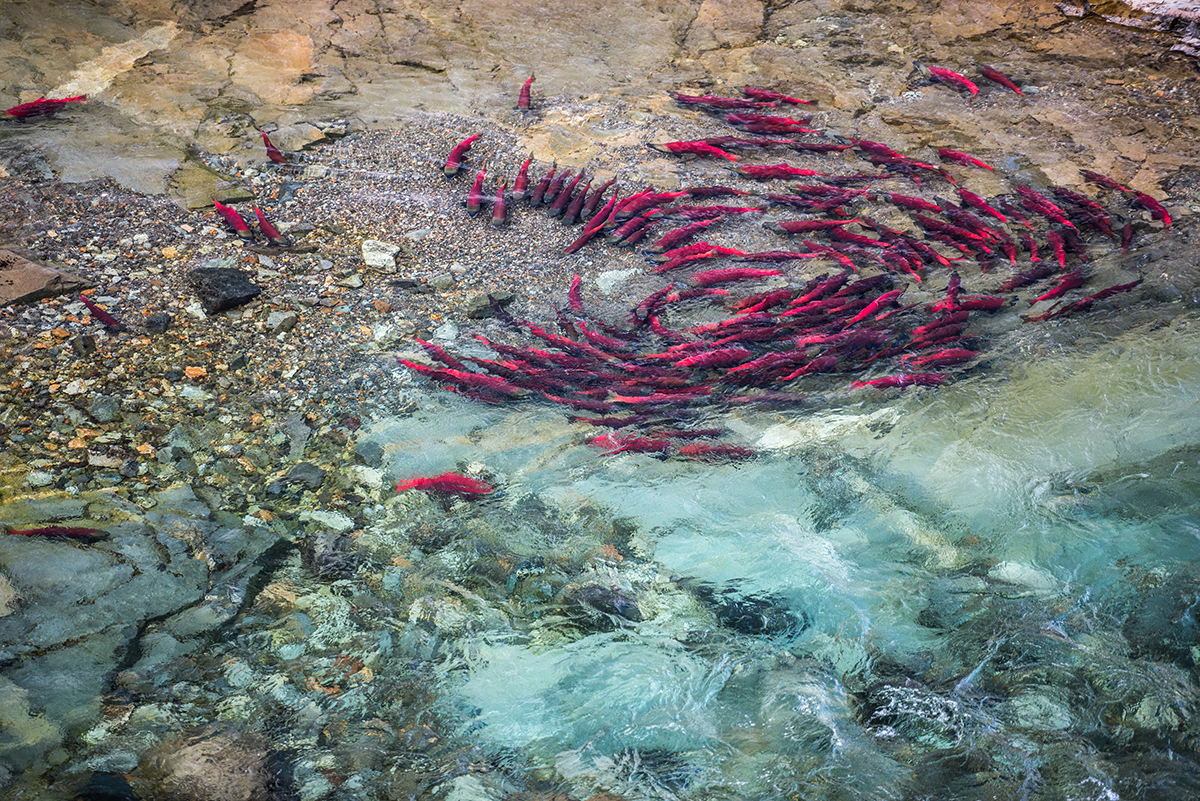
Sockeye Salmon / Kokanee
The sockeye, or red salmon, is an iconic species of Pacific salmon. It’s one of the most popular salmon for the table. And its abundance makes it a more sustainable option.
Learn all about sockeye salmon and kokanee.
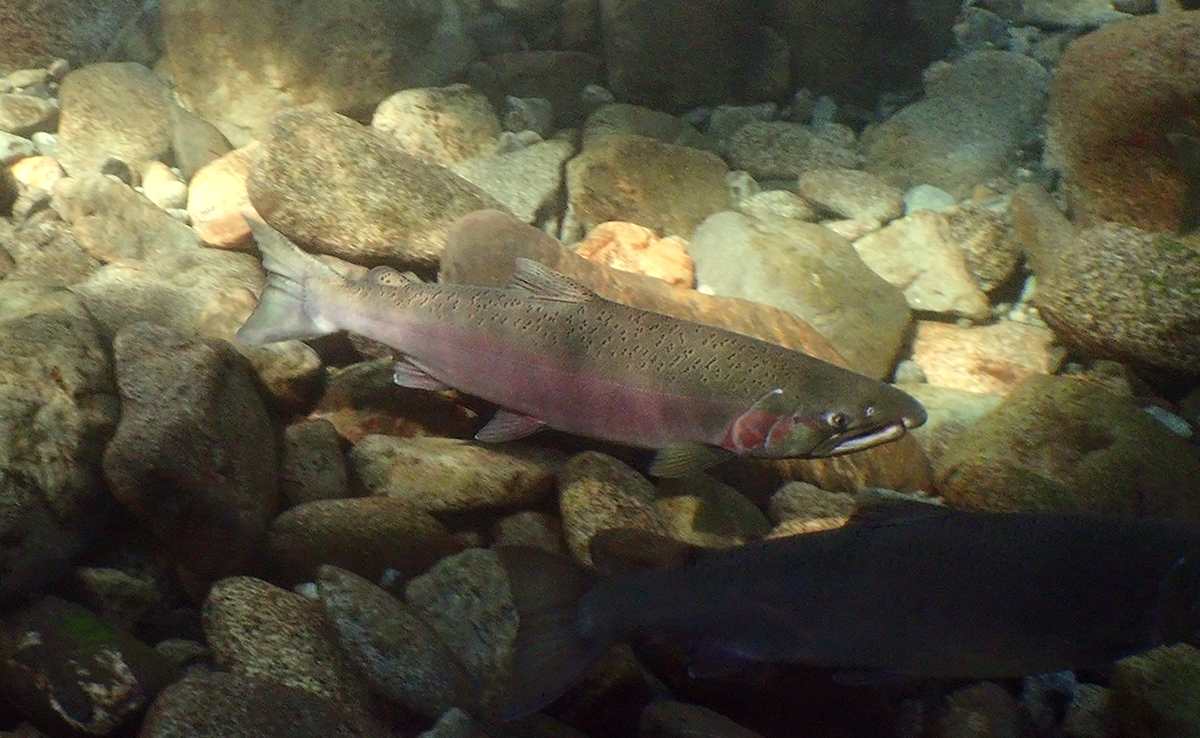
Coho Salmon
The coho, or silver salmon, is a popular salmon known for its leaping ability. This salmon spends more time in freshwater than the above three species. And it often spawns in small tributaries of larger river systems.
Learn about the coho salmon and its life cycle.
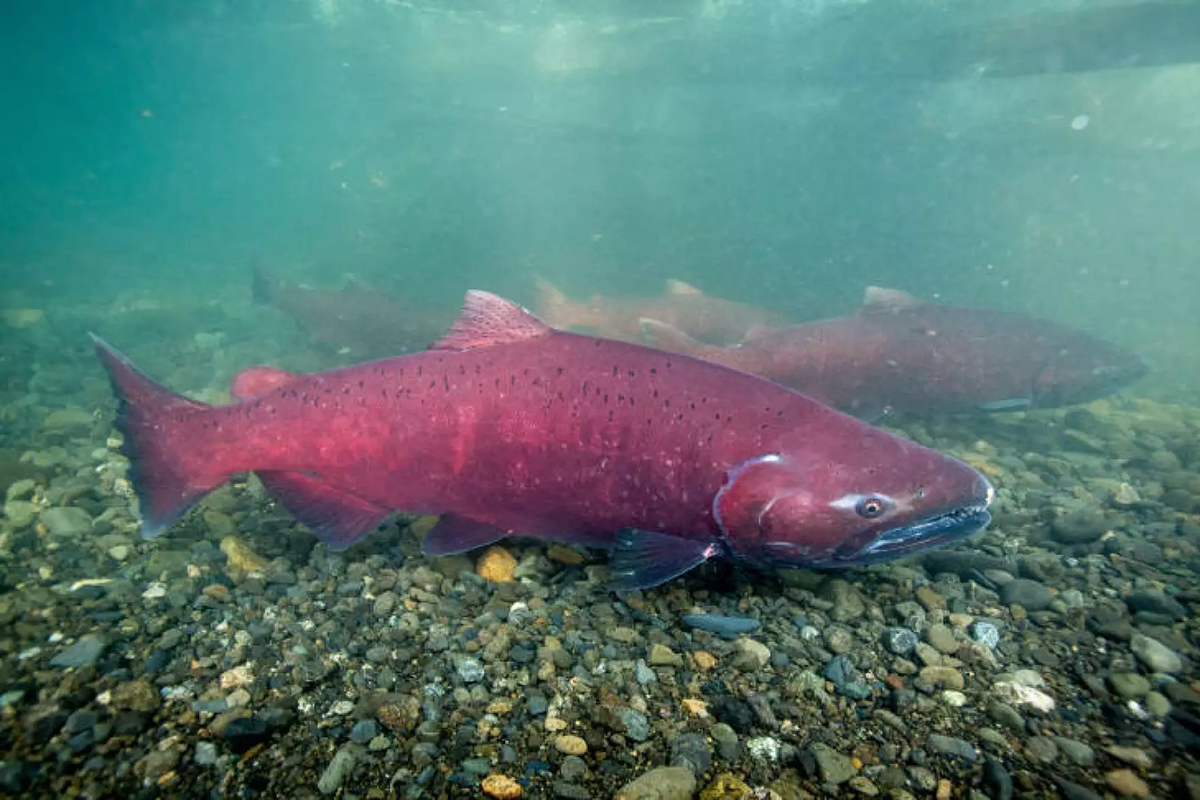
Chinook Salmon
Commonly called king salmon, the chinook is the largest of the Pacific salmon. It’s also the least abundant.
The chinook utilizes larger river systems for spawning. It’s a fish that often holds in deep and fast water and can be difficult to catch.
Learn about chinook salmon and its life history.
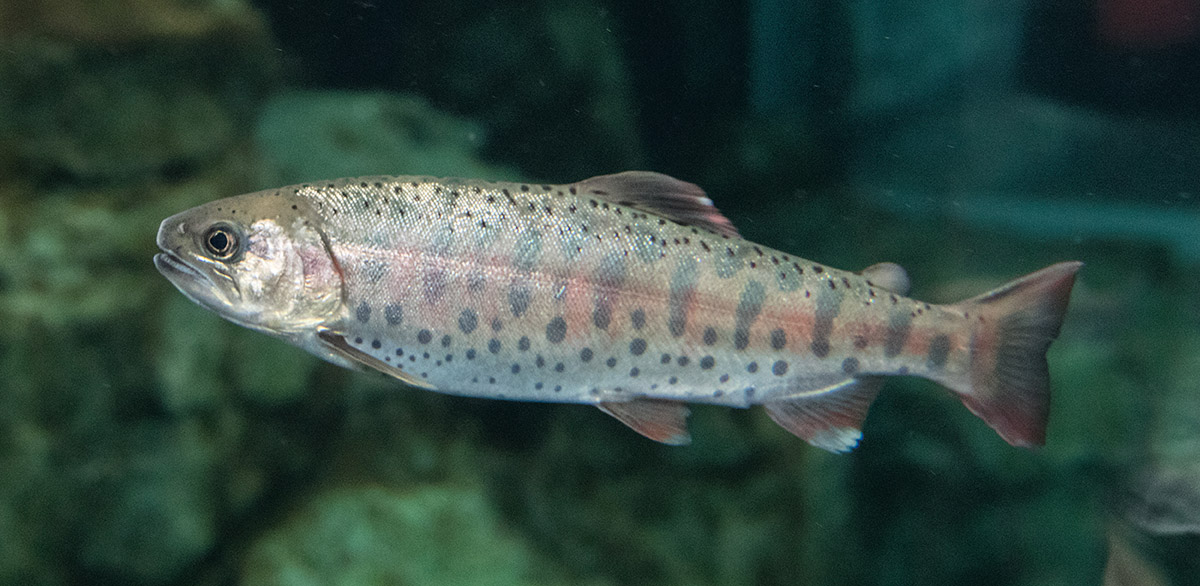
Masu Salmon
Masu salmon (Oncorhynchus masou) are a Pacific salmon species from the Western Pacific. Their range includes the Kamchatka Peninsula, Sakhalin Island, Kuril Islands, coastal Korea, Japan, and Taiwan.
Masu salmon are known for their striking, trout-like appearance. In freshwater, they often have a pink hue with olive backs, white bellies, and large parr marks. Mature masu display bright red stripes surrounded by a bronze coloration. Along with pink salmon, masu are the smallest Pacific salmon. Typical anadromous adults measure about 12-20 inches (30-51 cm) in length and weigh 1-5.5 pounds (0.5-2.5 kg). The IGFA all-tackle world record for masu is listed under masu trout. It weighed 11 pounds, 9 ounces (5.3 kg).
Masu salmon inhabit rivers, lakes, and coastal marine areas. Aquatic and terrestrial insects are their primary food source in freshwater. In marine environments, they primarily feed on crustaceans, zooplankton, and occasionally on smaller fish.
Masu salmon are fall spawners. Though they are technically iteroparous, most individuals die after. Only some resident males survive to spawn again the following year.
Pacific Trout Species
There are two widespread species of Pacific trout, plus several more isolated in remote mountain streams.
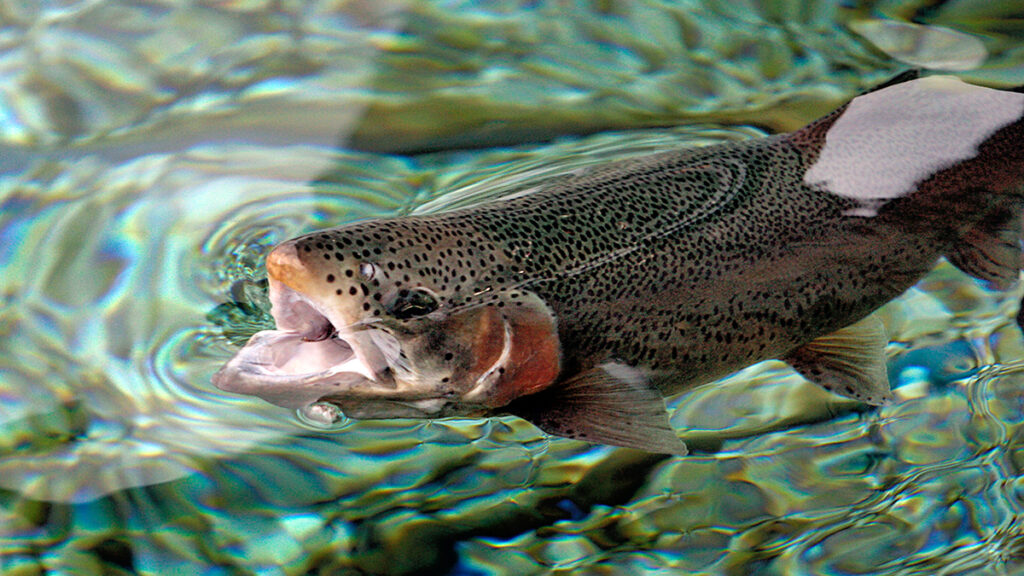
Rainbow Trout and Steelhead
The rainbow trout is one of the world’s most popular fish. Along with its ocean migrating form the steelhead, it’s an iconic gamefish, eaten around the world, and introduced to almost every continent.
Plunge into the remarkable world of rainbow trout.
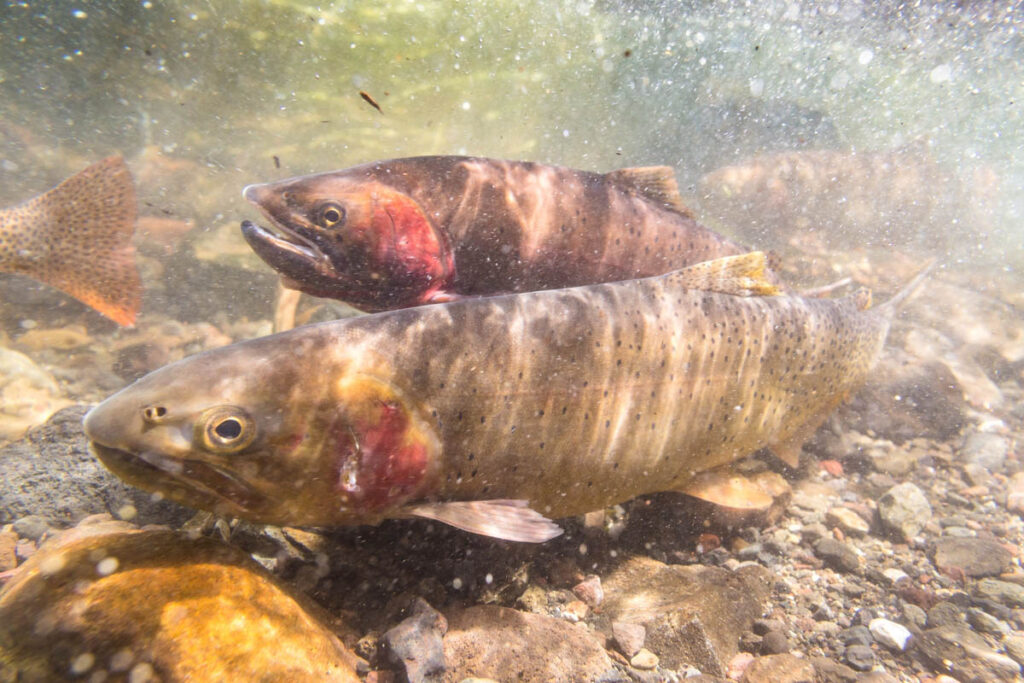
Cutthroat Trout
The cutthroat is an adaptable fish capable of surviving where so many others cannot. From the Pacific Ocean to the tiniest headwater streams, the cutthroat trout is ready for adventure.
Learn more about the fascinating cutthroat trout.
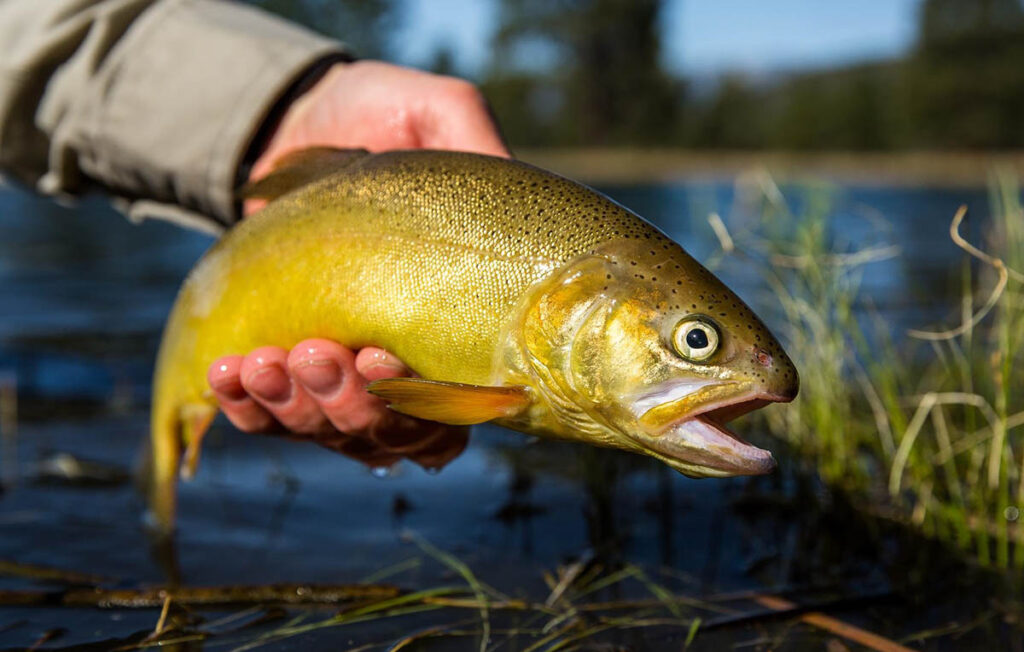
Gila Trout
The Gila trout (Oncorhynchus gilae) is a Pacific trout species native to the upper Gila River drainage in New Mexico and parts of Arizona.
Gila trout have a golden-yellow body, olive backs, and a faint pink band along their sides. They have numerous small spots on the upper halves of their bodies.
The native habitat of Gila trout consists of small, cool, high-elevation, and unstable mountain streams. They primarily consume aquatic and terrestrial invertebrates but are opportunistic feeders. They generally measure less than 10 inches (25.4 cm) in length and weigh less than 8 ounces (227 g). Gila trout have also been introduced to lakes, where they grow larger – up to 5 pounds 2 ounces (2.3 kg).
Gila trout are iteroparous, allowing them to survive multiple spawning events.
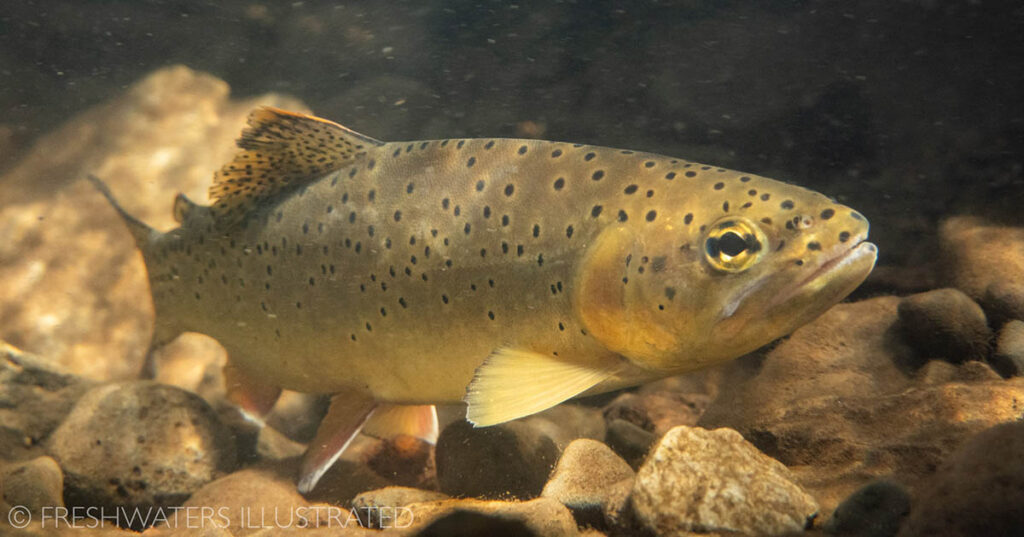
Apache Trout
The Apache trout (Oncorhynchus apache) is a Pacific trout species native to streams of the White Mountains in Arizona. Other common names are Arizona trout and yellow belly.
Apache trout are short and stocky with a yellow-gold coloration and olive on the head and dorsal. Their dorsal, pelvic, and anal fins have white tips, and some individuals have yellow or orange slashes like cutthroat trout. Another distinctive feature of Apache trout is black spots in front of, and behind their pupils resembling a mask.
Apache trout are native to small, cool, high-elevation, and relatively unstable streams. Typically, habitat and diet limitations in streams result in small adults under 10 inches (25.4 cm) and weighing less than 8 ounces (227 g). They’ve also been introduced into lakes where they can reach weights up to 5 pounds 15 ounces (2.7 kg). Apache trout are opportunistic predators but feed primarily on aquatic and terrestrial invertebrates.
Like the other species of Pacific trout, Apache trout are iteroparous, meaning they can survive spawning events. Still, they rarely live longer than six years.
Atlantic Salmon and Trout Species: Salmo
Atlantic salmon and trout are dominated by two iconic species: Atlantic salmon and brown trout. The various species in the genus Salmo range from North Africa to Europe, western Asia, and the western Arctic Ocean of Russia.
The genus name Salmo comes from the Latin salmō, which means “salmon.”
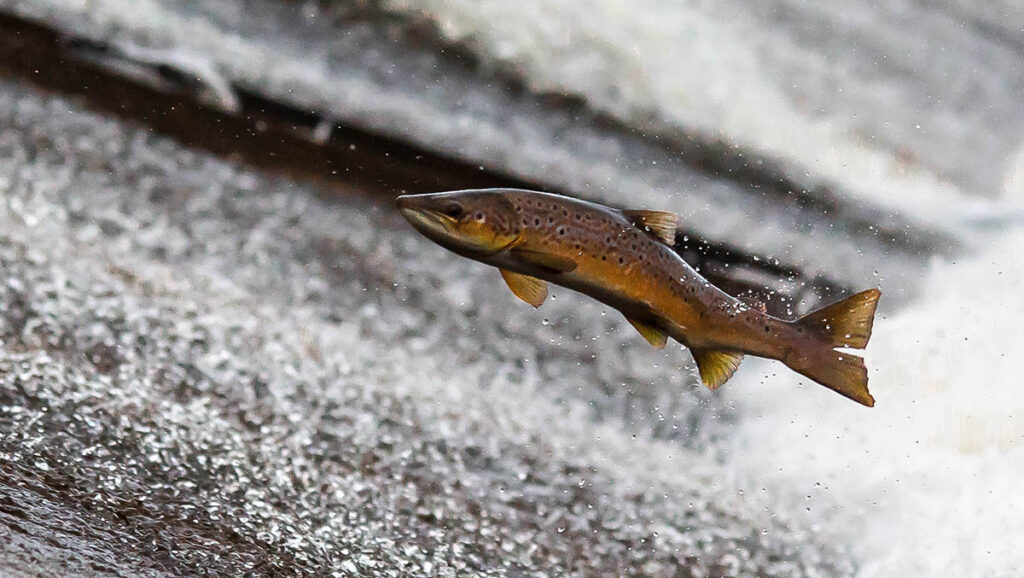
Atlantic Salmon
The Atlantic salmon (Salmo salar) is a salmon species found in the northern Atlantic Ocean from New England and Canada to Europe and Russia.
Juvenile Atlantic salmon in freshwater display parr marks and are colorful, often with red spots. In the ocean, they become silvery with darker backs and black spots on the upper half of their bodies. A purple and blue sheen is common in the right light. Back in freshwater and near spawning, mature Atlantic salmon can range from olive to orange, often with red and blue highlights.
Most Atlantic salmon utilize a variety of habitats in both freshwater and the ocean to complete their life cycle. In streams, they typically remain small until they migrate to the sea. In the ocean, adults commonly reach lengths of 30 to 36 inches (76-91 cm) and weigh 10 to 20 pounds (4.5-9.1 kg). The largest Atlantic salmon ever recorded was netted in the river Hope estuary in Scotland. It weighed 109 pounds (49.4 kg)! Landlocked populations are found in some freshwater lakes, but they are often smaller due to habitat constraints. Smaller still are rare stream-resident Atlantic salmon.
Like most salmonids, Atlantic salmon are opportunistic feeders, with diets varying by life stage. Juveniles feed on invertebrates (primarily aquatic and terrestrial invertebrates) and occasionally small fish. Adults in the ocean prefer fish such as capelin and herring but also consume plankton, crustaceans, smelt, sand lance, and juvenile cod.
Unlike most species of Pacific salmon, Atlantic salmon are iteroparous. This means they’re capable of surviving multiple spawning events. However, most spawn only once or twice due to the significant physiological toll of migration and spawning. Atlantic salmon typically live for 5-6 years, with some reaching up to 11 years.
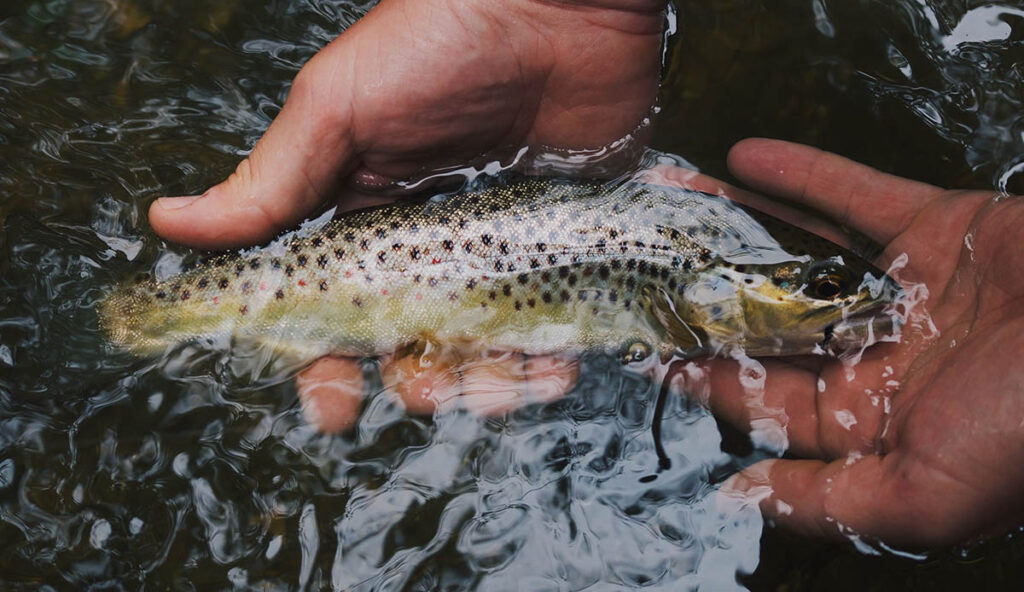
Brown Trout
The brown trout (Salmo trutta) is distributed across Europe, West Asia, and North Africa. It’s also been introduced globally, including in North and South America, Australasia, and parts of Africa. It’s a popular game fish and one of the world’s most invasive species outside its native range.
Brown trout exhibit a variety of colors and patterns, often including red and black spots on their bodies. Their coloration can vary significantly, ranging from silvery with few spots to a deep golden yellow or dark red.
Brown trout survive in diverse habitats, including streams, rivers, lakes, and marine environments. In small streams, they often remain under 12 inches (30 cm) in length. Brown trout can grow much larger in rivers and lakes. The current record angler-caught brown trout is 44 pounds, 5 ounces (20.1 kg). Some watersheds even have anadromous sea-run browns that migrate to the sea to feed and grow before returning to freshwater to spawn.
Brown trout are opportunistic feeders with a diet that varies with age and habitat. Juveniles primarily consume aquatic invertebrates, while adults may eat larger prey, including other fish. Brown trout in rivers and lakes feed on insects, crustaceans, and occasionally small mammals or birds.
Brown trout are iteroparous, capable of surviving multiple spawning events. They spawn in the fall in gravel beds in streams. The species is known for its longevity, with some individuals in non-anadromous populations living up to 20 years.
Species of Char: Salvelinus
Char are a cold water-loving close relative of trout. They’re known for their darker bodies with light-colored spots and are often quite colorful. The two most well-known species are Arctic char and brook trout. Other notable species include Dolly Varden, bull trout, and lake trout. Overall, char range from North America to Europe, northern Asia, and the Arctic.
The genus Salvelinus comes from the German saibling, which means “little salmon.”
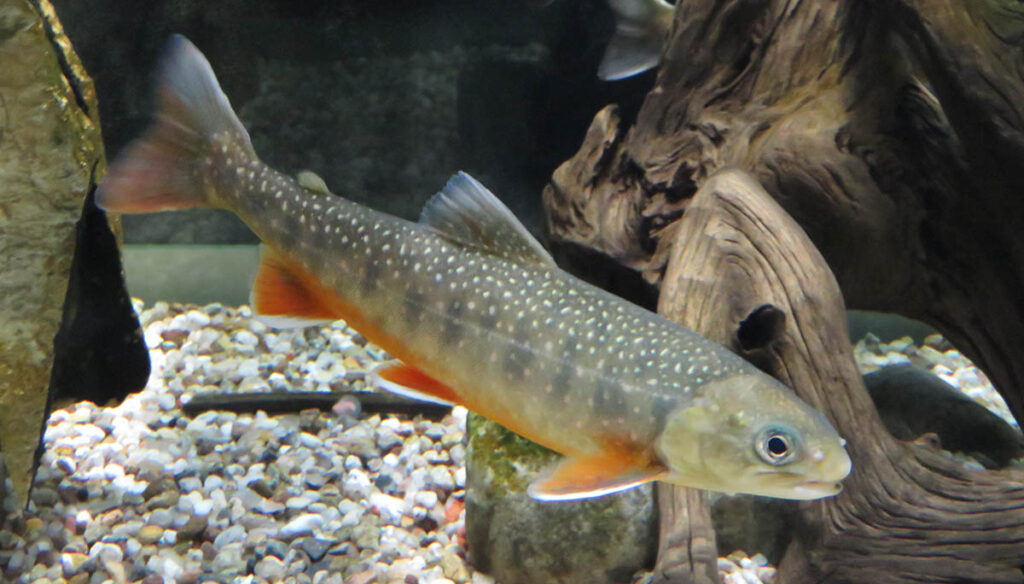
Arctic Char
Arctic char (Salvelinus alpinus) are a char species with a circumpolar distribution, which includes North America, Europe, and Asia. They’re also the most northerly distributed freshwater fish in the world.
Arctic char exhibit a highly variable appearance depending on the season and habitat. Their coloration ranges from dark, almost black, to silver with bright spots. Fish in lakes are usually less than 18 inches (46 cm) in length and weigh up to 2 pounds (0.9 kg) with a maximum of around 15 pounds (6.8 kg). Some anadromous populations of Arctic char grow even larger. The 32 pounds, 9 ounces (14.8 kg) world-record Arctic char was from an anadromous population in the Tree River, in NT, Canada.
Arctic char are found in both freshwater and marine environments. Their primary habitats are deep, cold lakes and coastal marine waters. They typically feed on smaller fish, crustaceans, and insects.
Spawning typically occurs in autumn. Females lay eggs in gravel nests on the lake or riverbed which the males fertilize. Arctic char are iteroparous, meaning they can spawn multiple seasons. They are notable for their adaptability and resilience, which allow them to survive in some of the harshest environments on Earth.
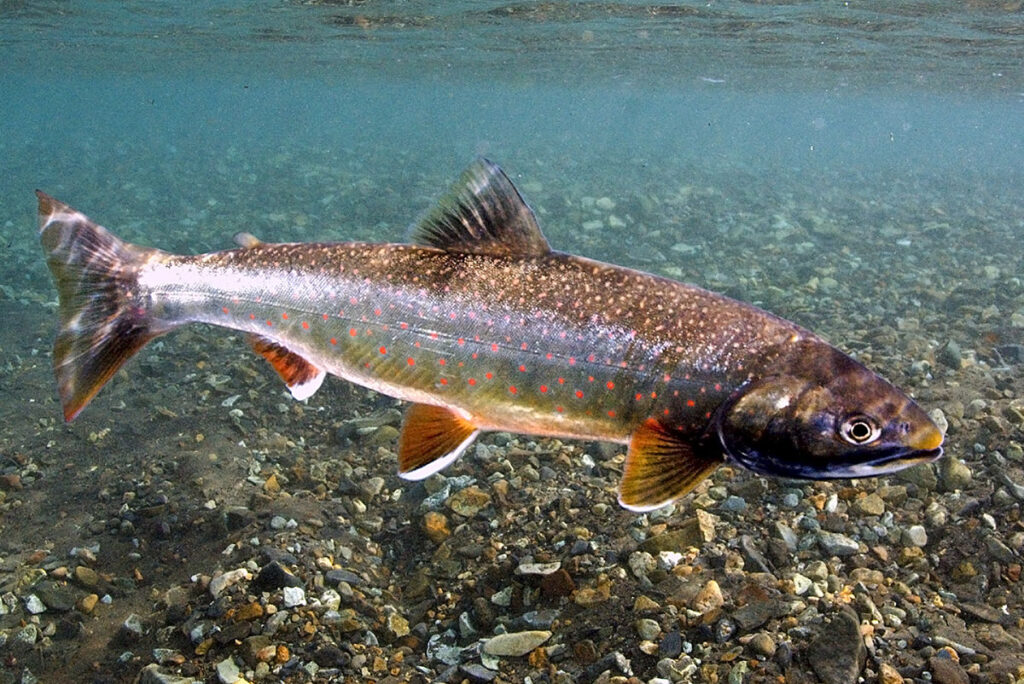
Dolly Varden
Dolly Varden (Salvelinus malma) are a species of char native to the North Pacific and Arctic basins. Dollies are often mistaken for other char species like the bull trout and Arctic char. They’re known for their vibrant coloration, which inspired their name from a character in Charles Dickens’ Barnaby Rudge.
Dolly Varden range from the Puget Sound to the Mackenzie River in North America. They’re also found in parts of Asia, from Siberia to northern Japan.
Dolly Varden typically grow around 14 to 18 inches (36-46 cm) and weigh 1-1.5 pounds (0.5-0.7 kg), with the largest recorded individuals reaching up to 27 pounds 6 ounces (12.4 kg). They inhabit numerous environments, including cold, clear streams and coastal marine waters, where they feed on a variety of invertebrates and small fish.
For a deep dive into this charismatic char, including their complex taxonomy, life cycle, and conservation, check out this educational content on Dolly Varden.
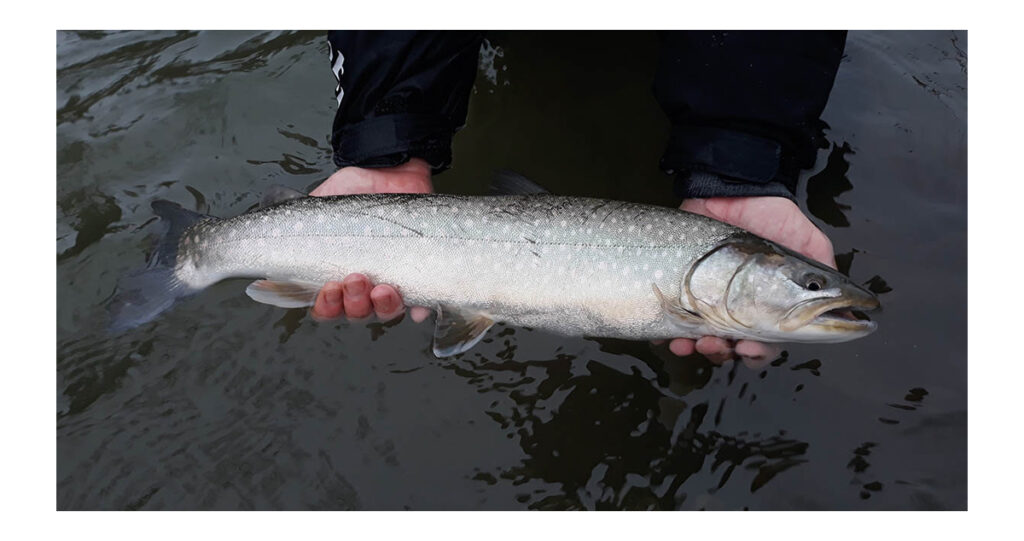
Bull Trout
Bull trout (Salvelinus confluentus) are a char species native to western North America. This apex predator is often confused with the related Dolly Varden.
Mature bull trout can range in length from 18 to 36 inches (46-91 cm) and weigh between 2 to 10 pounds (0.9-4.5 kg), with the largest recorded individuals reaching up to 32 pounds (14.5 kg).
They inhabit cold, clean waters in streams, large rivers, and lakes. Bull trout have a varied freshwater diet including aquatic and terrestrial insects, fish, fish roe and carcasses, and even small rodents. Anadromous bull trout also inhabit coastal marine environments, where they are similarly opportunistic in their diet.
Learn about about bull trout.
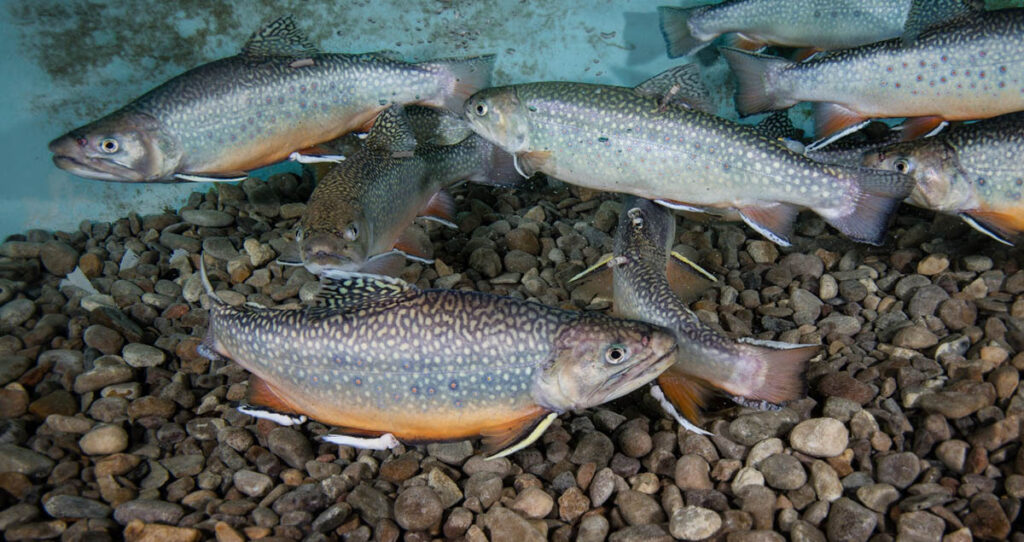
Brook Trout
The brook trout (Salvelinus fontinalis) is a char species native to Eastern North America from the Great Lakes to the Atlantic coast and down the Appalachian Mountains. Common names for this member of the char family include Eastern brook trout, brookies, brook char, and speckled trout.
Brook trout are typically dark but display striking colors. With a base orange and olive coloration, they have yellow spots and marbling on their back plus red spots encircled by blue halos. Lacustrine and anadromous brook trout are often lighter and more subdued in coloration.
Brook trout require cold, clear streams, rivers, and lakes to survive. Coastal marine habitats are also utilized in some populations. Their size is mostly habitat-dependent. In small streams, they typically grow to 5 to 8 inches (13-20 cm) and less than 4 ounces (113 g). They can grow larger in rivers and lakes. The largest brook trout ever recorded came from the Nipigon River in 1915, and it measured 31.5 inches (80 cm) long and 14.5 pounds (6.6kg). Migratory populations of adfluvial “coasters” in the Great Lakes and anadromous “salters” along the Atlantic coast can also grow large.
Brook trout are opportunistic feeders. Juveniles primarily consume plankton and insects. As adults, they eat a variety of aquatic and terrestrial insects, crustaceans, and small fish. The diet of brook trout in coastal waters can include marine organisms like shrimp and small fish.
Brook trout are iteroparous and spawn in the fall. They spawn over gravel beds in streams or lakes, with fry emerging and beginning to feed shortly after hatching in the spring. Brook trout generally live up to 3-4 years, though some can live longer, particularly in colder, more stable environments.
Learn more about brook trout.
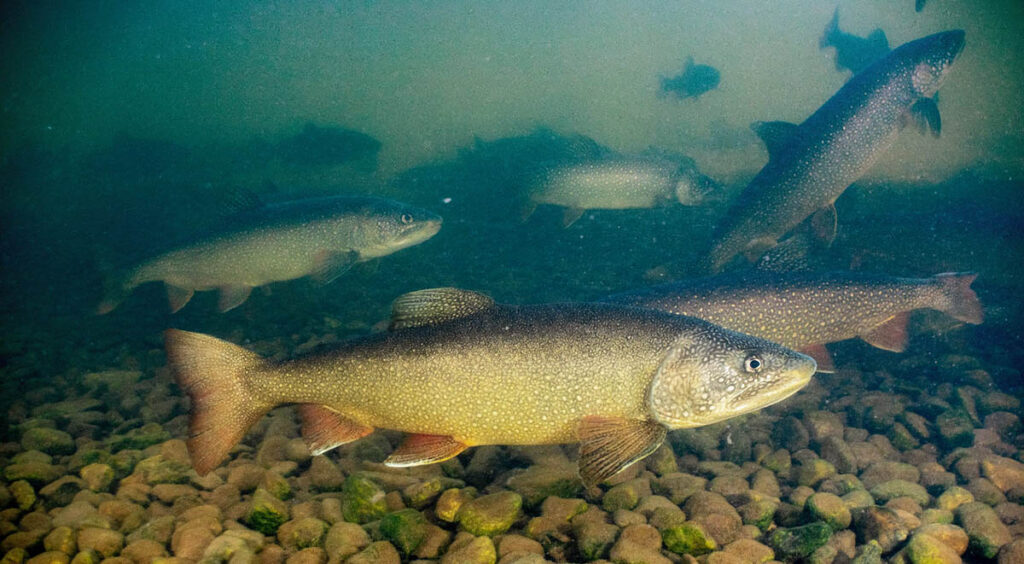
Lake Trout
Lake trout (Salvelinus namaycush) are a freshwater char species native to northern North America from Alaska to the northeastern US and Canada. This species is also known as mackinaw, laker, togue, gray trout, and namaycush.
Lake trout are typically silver-gray with light spots. Their coloration is less flamboyant than other char. Lake trout can grow quite large. The largest laker ever recorded was caught in a gill net in Lake Athabasca in Canada. It weighed 102 pounds (46.3 kg)! The more common range for adult lake trout is between 24 to 36 inches (61-91 cm) and 15 to 40 pounds (6.8-18.1 kg).
These fish inhabit cold, oxygen-rich waters, primarily in deep lakes. They are pelagic, especially during summer stratification, where they may dwell at depths of 66 to 197 feet (20-60 m). Lake trout are slow-growing and late to mature. This makes them vulnerable to overfishing. They feed on a diet of fish and aquatic invertebrates, with a preference for deep-water forage when available.
Lake trout spawn in the fall, typically over rocky or gravelly lake beds. They are iteroparous, meaning they can spawn multiple times throughout their lives.
Learn more about lake trout with this comprehensive profile.
Grayling Species: Thymallus
Grayling are salmonids known for their sail-like dorsal fins and vivid colors. They’re adapted to frigid, oxygen-rich waters and are distributed across the northern hemisphere. There are as many as 15 Thymallus species, the two most well-known being European grayling and Arctic grayling. Other notable species include Mongolian grayling, Amur grayling, Baikal black grayling, and Baikal-Lena grayling.
Thymallus derives from the Greek word for “thyme smell.”
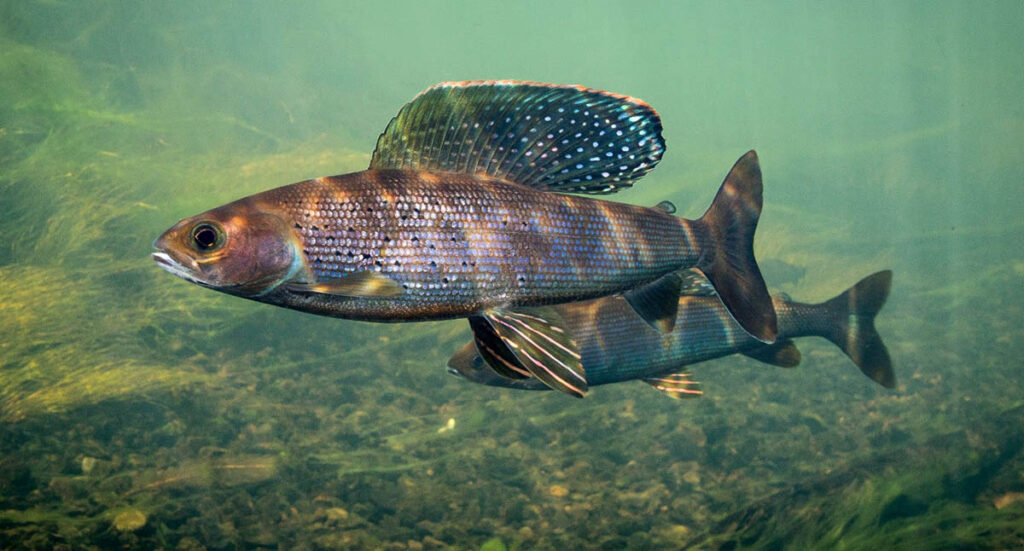
Arctic Grayling
Arctic grayling (Thymallus arcticus) are distributed across the Arctic and Pacific drainages in North America and Eurasia. They’re native to Alaska, Canada, and Siberia, with reintroduced populations in the upper Missouri River drainage in Montana.
Arctic grayling are colorful, with iridescent spots and markings on their pelvic fins and sail-like dorsal fins. They have larger scales than trout and often have black spots on their bodies.
Arctic grayling survive in diverse habitats, including streams, rivers, and lakes. They are intolerant of warm water. The typical adult Arctic grayling measures around 10-14 inches (25-35 cm) in length and weighs between 1-2 pounds (0.5-0.9 kg). The maximum recorded length was 30 inches (76 cm), and the maximum weight was 8.4 pounds (3.8 kg).
Arctic grayling are opportunistic feeders with a diet that varies with age and habitat. Juveniles primarily consume zooplankton and insect larvae, while adults eat larger prey, including smaller fish. During summer, they feed voraciously on aquatic insects, crustaceans, and fish eggs. In winter, they feed minimally, conserving energy in deeper, slow-current pools or lakes.
Arctic grayling spawn in the spring in shallow areas of rivers with fine, sandy substrates and moderate currents. Males are territorial and court females by flashing their colorful dorsal fins. The species is iteroparous, capable of surviving multiple spawning events.
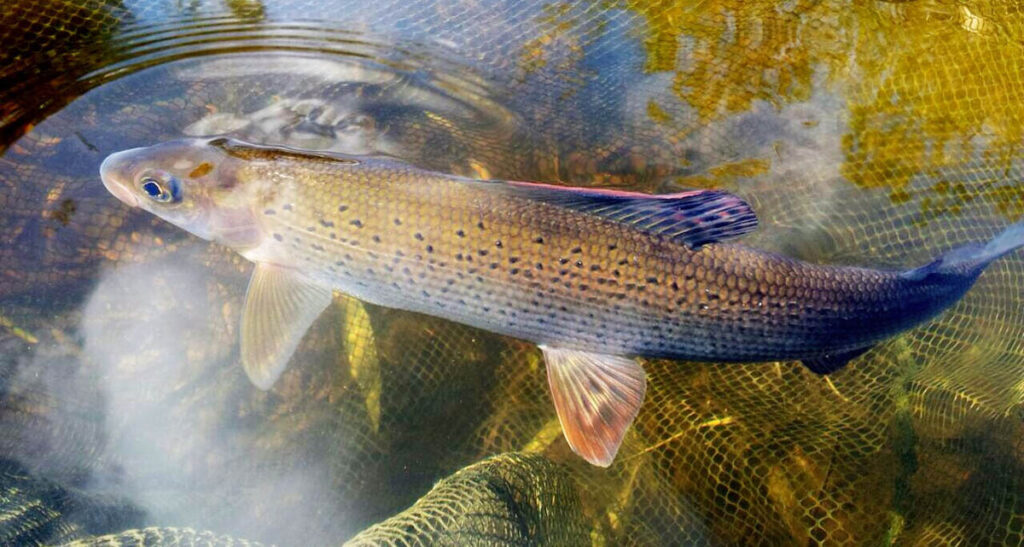
European Grayling
Grayling (Thymallus thymallus), or European grayling, are distributed across Europe and Russia. They are the type species of the Thymallus genus.
European grayling are beautiful, with an impressive dorsal fin with red and black spots and vibrant colors. Their other fins can also be quite colorful, especially their pelvic fins. Grayling also have large, iridescent scales and black spots on their bodies.
Like Arctic grayling, European grayling need cold, clean water. They inhabit streams, rivers, lakes, and occasionally, brackish and nearshore marine habitats. Adult European grayling usually measures around 10-18 inches (25.4-45.7 cm) in length and weigh between 1-2 pounds (0.5-0.9 kg). The IGFA all-tackle world record grayling was 4 pounds 12 ounces (2.2 kg).
European grayling are omnivores with a diet varying with age and habitat. Juveniles primarily consume zooplankton and insect larvae – particularly chironomid larvae. Adults eat aquatic and terrestrial insects, fish eggs, and very small fish on occasion.
European grayling are spring spawners. They choose locations near the heads of pools with fine substrate and moderate currents. Males are territorial and court females by flashing their colorful dorsal fins. The species is iteroparous, and the oldest individuals can live up to 12 years.
Whitefish Species: Coregoninae
Whitefish are salmonids known for their mild flavor and high omega-3 fatty acid content. They live in cool rivers and lakes across the northern hemisphere. Some species utilize marine habitats, as well. There are many notable whitefish species, including the mountain whitefish, common whitefish, lake whitefish, cisco, and inconnu. These species are spread across three genera: Coregonus, Prosopium, and Stenodus.
The genus name Coregoninae is derived from the Greek “coregonus,” which combines “kore” (pupil of the eye) and “gonia” (angle or corner).
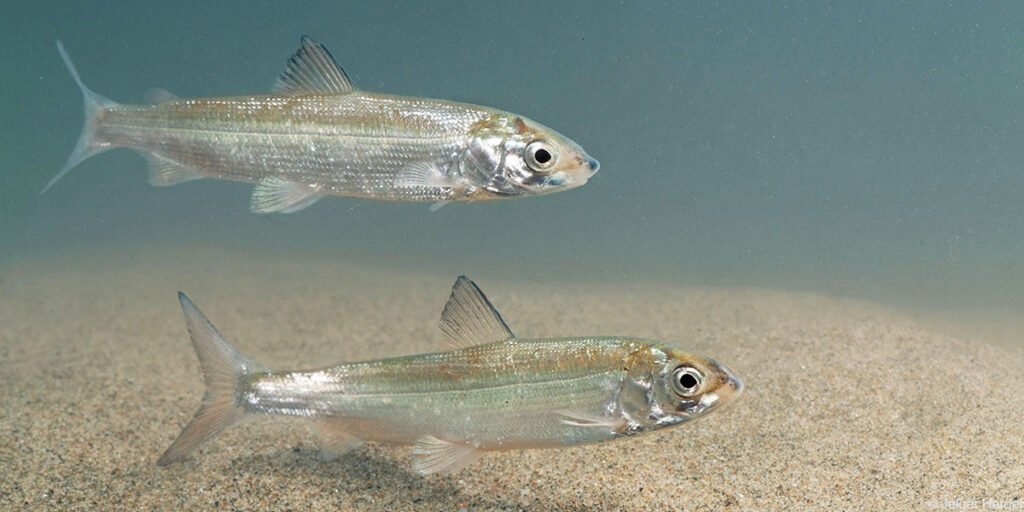
European Whitefish
The European whitefish (Coregonus lavaretus) is widely distributed across Europe and Asia. It’s highly adaptable and occupies diverse habitats, including deep, oligotrophic lakes, slow-moving rivers, and even coastal marine waters. It has several names, including the common whitefish, lavaret, and Alpine lake whitefish.
European whitefish are slender and silvery fish with a streamlined body and small head. They typically range from 12 to 20 inches (30 to 50 cm) in length and weigh between 0.5 to 4 pounds (0.2 to 1.8 kg), though some individuals can grow larger. Their scales are bigger than most salmonids and have a subtle iridescent sheen, especially along their lateral line.
This species has a varied diet but primarily feeds on zooplankton and aquatic insects. Terrestrial insects, crustaceans, and small fish are also occasionally eaten.
Spawning occurs in late autumn to early winter, with fish migrating to shallow, gravelly areas of lakes or rivers to lay their eggs.
European whitefish exhibit considerable morphological and ecological diversity, with numerous recognized subspecies and local forms adapted to specific environments. Well-known fish with the European whitefish complex include the powan in Scotland (Coregonus clupeoides), the gwyniad (Coregonus pennantii) in Wales, and the houting (Coregonus oxyrinchus).
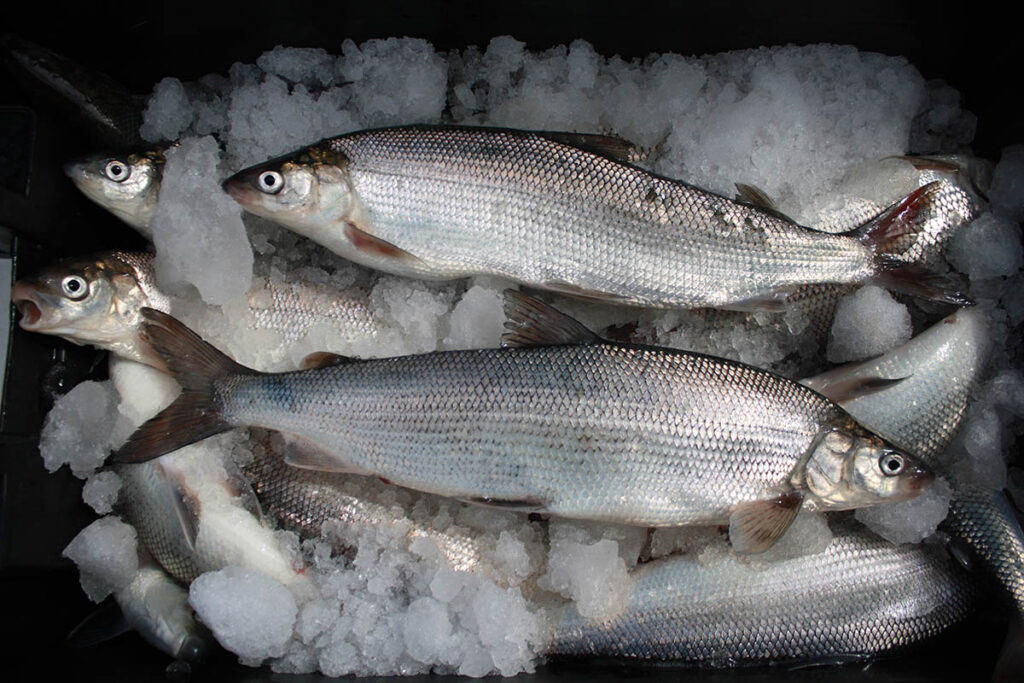
Lake Whitefish
The lake whitefish (Coregonus clupeaformis) is a prominent freshwater whitefish native to North America. It’s widely distributed throughout Canada and the northern United States, with significant populations in the Great Lakes.
Lake whitefish are recognized by their distinctive body shape. They’re often described as “humpbacked” due to their small head size relative to the body. The mouths of lake whitefish open slightly below the snout, allowing them to feed efficiently on bottom-dwelling organisms. They are one of the largest whitefish species, with an average maximum of around 4 pounds (1.8 kg), though individuals up to 15 pounds (6.8 kg) and 31 inches (79 cm) in length have been recorded.
Their diet shifts as they grow; juveniles feed primarily on plankton, while adults consume a variety of bottom-dwelling invertebrates, including insect larvae, mollusks, and small crustaceans.
Spawning occurs in the fall, from September to January. Lake whitefish choose areas in shallow waters over gravel and rubble substrates to deposit their eggs.
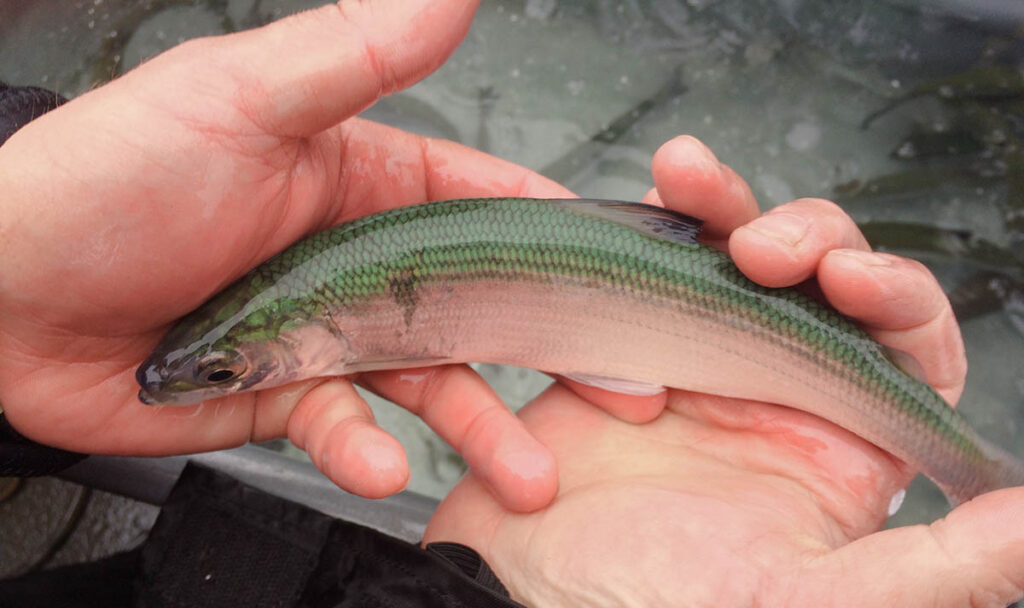
Northern Cisco
The cisco (Coregonus artedi), also known as lake herring and northern cisco, is a freshwater whitefish native to the Great Lakes and other deep lakes from eastern Canada to Alaska.
Ciscos are relatively small fish. They range from 9-16 inches (23-41 cm) in length and weigh up to 5 pounds (2.3 kg). Most fish are at the smaller end of this scale. They’re silvery with light pink iridescent scales. They have slender bodies, large eyes, and slightly forked tails. Ciscoes have a diet primarily consisting of zooplankton and aquatic insects. They’re also important prey species for larger predators such as lake trout and walleye.
Ciscos typically spawn in late autumn, with females laying eggs in shallow waters over gravelly or sandy substrates. The eggs incubate through the winter, hatching in the spring when the water begins to warm.
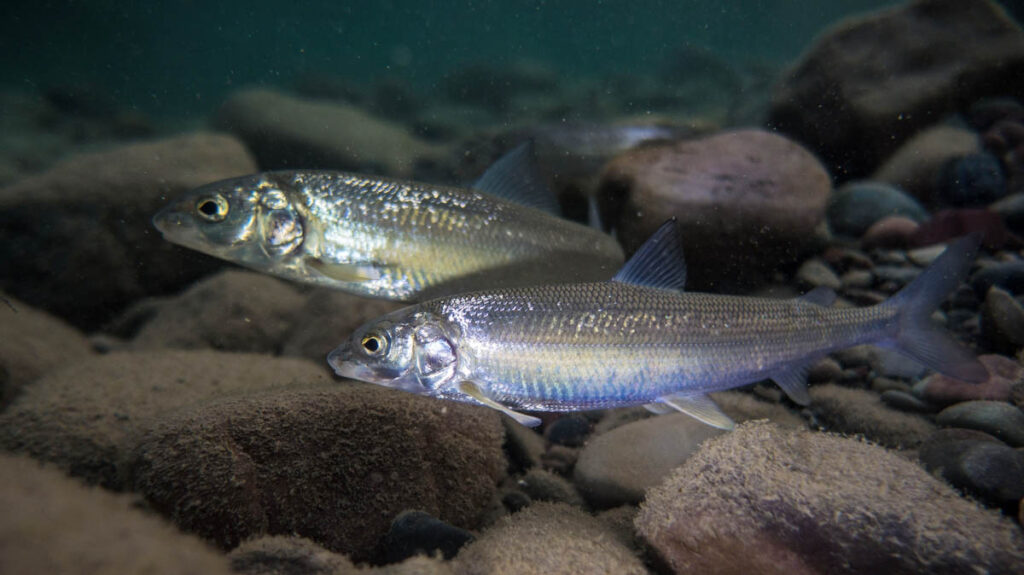
Mountain Whitefish
The mountain whitefish (Prosopium williamsoni) is a whitefish native to the cold, clear rivers and lakes of western North America. It’s commonly found in the Pacific and Rocky Mountain drainages, extending from northwest Canada down to the Great Basin in the United States.
Mountain whitefish are slender, silvery fish with a small, downward-facing mouth. They typically measure around 9-18 inches (23-46 cm) in length and weigh between 0.5-2 pounds (0.2-0.9 kg). The largest mountain whitefish ever recorded measured 24 inches (61 cm) long and weighed 5 pounds, 12 ounces (2.6 kg).
Mountain whitefish are bottom feeders, with a diet of aquatic insects, larvae, small crustaceans, and other benthic invertebrates. They use their downward-facing mouth to forage along the substrate.
Spawning occurs in late fall, usually from October to December, in shallow, gravelly areas of rivers or lakeshores. Mountain whitefish do not construct nests. Instead, they rely on the gravel to protect their eggs from predators and strong currents.
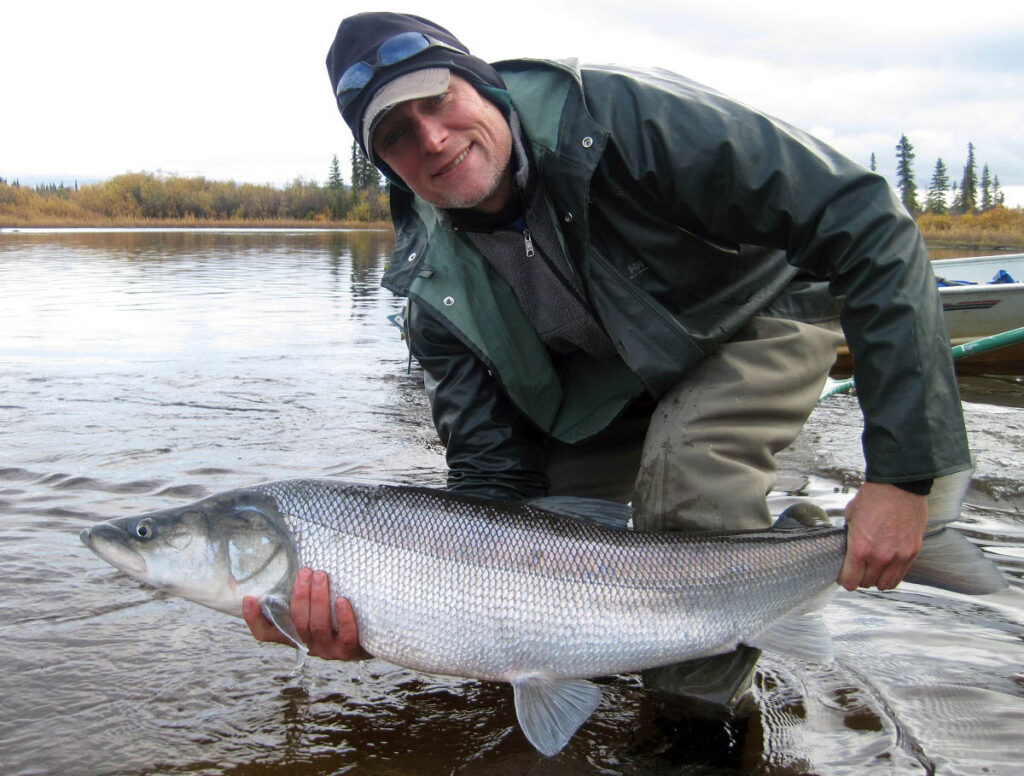
Sheefish
Inconnu (Stenodus leucichthys nelma), also known as sheefish, are the largest member of the whitefish subfamily. These fish are widely distributed across the Arctic drainages of North America and northern Asia, extending from Alaska and Canada to Siberia and the White Sea. An isolated population (S. l. leucichthys) also exists in the Caspian Sea and its tributaries.
Inconnu are characterized by their large size and silvery bodies. They have a distinctive protruding lower jaw filled with densely packed small teeth. Inconnu can grow to over 42 inches (100 cm) in length and weigh up to 53 pounds (24 kg), though they are typically smaller.
These fish are known for their remarkable migratory behavior. Inconnu can travel over 1,000 miles (1,600 km) within a single summer, moving between feeding and spawning grounds. They often overwinter in the brackish waters of large bays and estuaries, migrating upriver in the spring and summer to feed and eventually spawn. Spawning occurs in late September to early October in shallow, gravelly areas of rivers.
Juvenile inconnu feed on insects and other small aquatic organisms. Adults shift to a diet almost entirely composed of fish. They’re opportunistic feeders, often varying their summer feeding locations annually.